Is Expeditions: Samurai Worth Buying? PC Early Access Review and Impressions (2026)
When I first heard that Expeditions: Samurai was leaving the Roman world behind and heading into feudal Japan, I wasn’t completely convinced. Expeditions: Rome set a very high standard for tactical RPGs, and changing both the historical setting and several core gameplay systems felt like a gamble.
Now that the game has officially entered Steam Early Access on August 7, 2026, I think it’s finally possible to answer the question many strategy fans have been asking:
Is Expeditions: Samurai worth buying right now?
After watching developer presentations, following community impressions, reading player discussions, and comparing the new mechanics with previous Expeditions games, I’d say the answer depends less on the game’s quality and more on what kind of player you are.
The foundation is already impressive, but this is still very much an Early Access title.
A Fresh Setting That Feels Like the Right Direction
Instead of retelling another famous chapter of Japanese history, Campfire Cabal takes a more creative route.
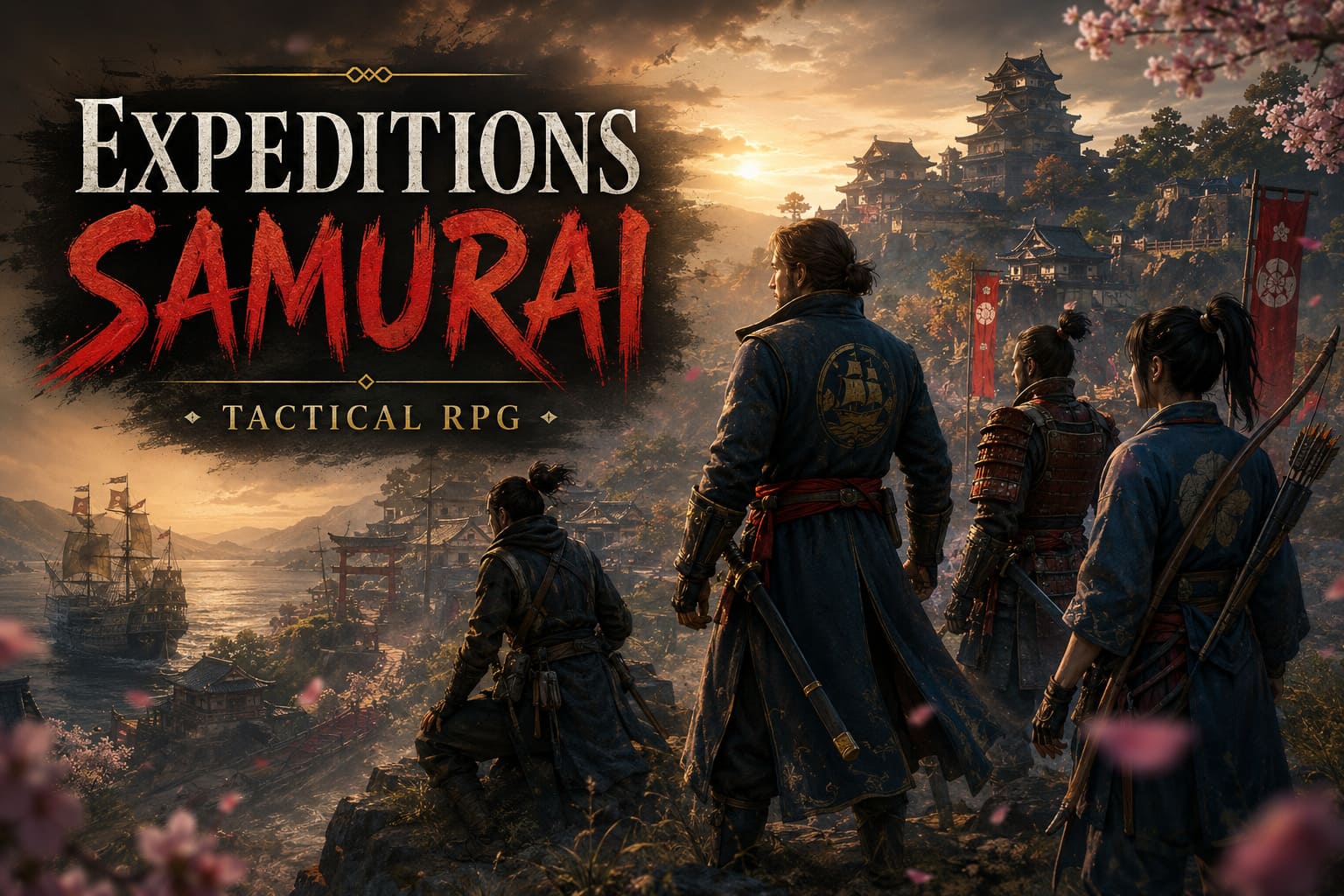
Rather than stepping into the shoes of William Adams, you’re introduced as Captain Flynn, commander of a struggling crew aboard the Dutch ship De Albatros. Arriving in Japan shortly before Adams himself, your story gradually becomes intertwined with the violent political conflicts of the Sengoku era.
I actually prefer this approach.
It gives the writers far more freedom while still remaining grounded in historical events. The game isn’t trying to recreate history scene by scene. Instead, it builds an alternate version that still respects the period.
Even in its current state, Act 1 introduces enough political intrigue, alliances, betrayals, and moral decisions to make me curious about where the remaining acts will go.
Combat Is Still the Biggest Reason to Play
If you enjoyed Expeditions: Rome, you’ll immediately recognize the tactical DNA.
Grid-based battles remain at the center of the experience, but almost every major system has received meaningful adjustments.
The biggest improvement, in my opinion, is how much freedom the game now gives the player.
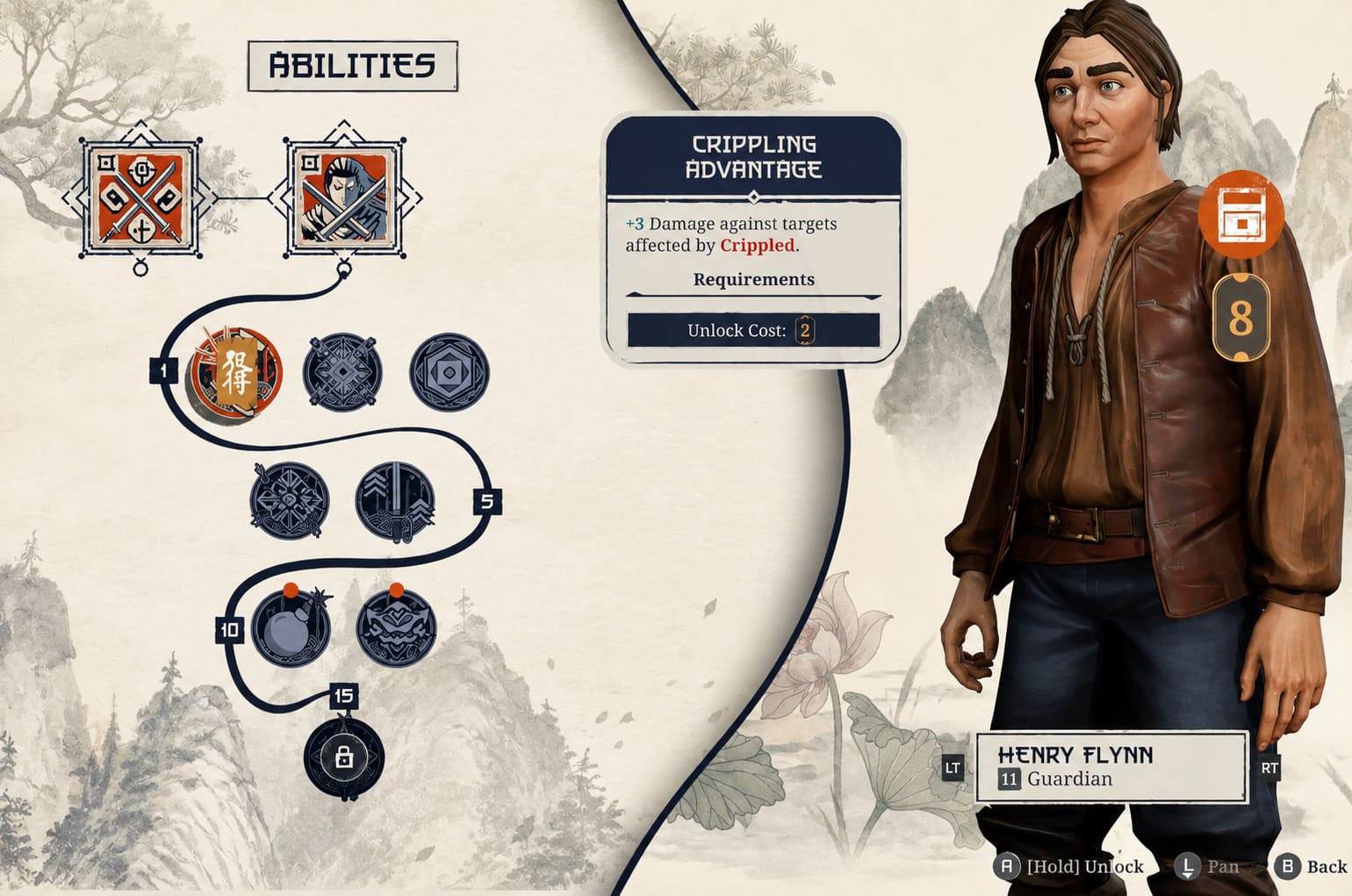
Instead of locking characters into rigid combat roles forever, equipment plays a much larger role in defining abilities. Switching from a European saber to a Japanese katana doesn’t simply change damage numbers—it changes the available combat techniques entirely.
That creates far more room for experimentation.
I found this far more interesting than traditional class restrictions because it encourages adapting your squad before every major encounter instead of relying on the exact same builds for dozens of hours.
The New Turn Structure Changes Everything
One mechanic surprised me more than anything else.
Instead of alternating turns based on initiative, your entire squad acts together before the enemy responds.
It sounds like a small change on paper.
It absolutely isn’t.
Being able to reposition every character, coordinate attacks, create flanking opportunities, and trigger multiple abilities before the AI gets a chance to interrupt makes every battle feel far more tactical.
Planning becomes the challenge rather than reacting.
For players who enjoy thinking several moves ahead, this system is probably one of the strongest additions the series has ever made.
Stealth Finally Matters
Another feature that genuinely caught my attention is the addition of real-time stealth.
Older Expeditions games occasionally flirted with stealth mechanics, but they never became an essential part of gameplay.
Here they actually work.
Before combat begins you can:
- Split your party into multiple infiltration teams
- Distract guards with tools like firecrackers
- Perform silent eliminations
- Position companions for surprise attacks
- Completely reshape the battlefield before combat starts
This creates a satisfying rhythm where planning outside combat becomes just as important as the tactical battle itself.
Not every mission requires stealth, but having it as a meaningful option makes encounters feel less repetitive.
Co-op Looks Like One of the Best Features
If there’s one feature almost everyone seems excited about, it’s cooperative play.
Instead of simply letting another player control an extra character during combat, the developers built co-op directly into the campaign.
Two players can:
- Explore different parts of towns simultaneously.
- Participate together during conversations.
- Influence story decisions.
- Coordinate stealth infiltrations.
- Fight tactical battles together.
Even better, the story adapts around having two protagonists rather than awkwardly pretending a second player doesn’t exist.
That’s a level of integration many RPGs never achieve.
If you regularly play strategy games with a friend, this alone could justify jumping into Early Access.
Characters Feel More Expressive Than Before
One visual improvement I didn’t expect to appreciate as much as I did involves dialogue.
Previous Expeditions games relied heavily on illustrated portraits.
This time, expressive 3D character models replace those static images.
It’s a relatively subtle change, but it makes conversations noticeably more engaging.
Facial expressions shift depending on your decisions, companions visibly react during important discussions, and emotional moments carry more weight because characters no longer feel frozen in place.
Combined with the colorful environments of feudal Japan, the presentation feels much more modern than previous entries.
Early Access Problems Are Impossible to Ignore
As much as I like what Campfire Cabal is building, I also think it’s important to be realistic.
This is not a polished 1.0 release.
Players have already reported several issues, including:
- Missing voice acting for some NPCs.
- Dialogue audio occasionally overlapping.
- Animation glitches after enemy deaths.
- Rough user interface elements.
- Tutorials that leave some mechanics unexplained.
- Crafting systems that are only partially available.
None of these completely ruin the experience.
Most are the kind of issues I’d expect from a large tactical RPG launching into Early Access.
Still, anyone expecting a perfectly polished experience should probably wait.
The Road Ahead Looks Promising
Fortunately, Campfire Cabal has been transparent about its plans.
The current version represents only the opening act of a much larger adventure.
According to the development roadmap, future updates will gradually introduce major campaign content, additional gameplay systems, and extensive technical improvements before the full release.
| Feature | Early Access | Planned for Version 1.0 |
|---|---|---|
| Story | Act 1 available | Complete four-act campaign |
| Combat | Fully playable | Balance improvements and additional refinement |
| Crafting | Limited features | Full crafting progression |
| Voice Acting | Partially complete | Fully voiced campaign |
| Performance | Ongoing optimization | Improved stability and bug fixes |
| Content | First region | Remaining campaign acts and additional systems |
If the team follows this roadmap successfully, Expeditions: Samurai could easily become one of the strongest historical tactical RPGs available on PC.
Should You Buy It Today?
For me, the answer comes down to expectations.
If you enjoy helping shape games during development, you’ll probably have a great time.
The combat already feels rewarding.
The stealth systems add variety.
The cooperative campaign looks genuinely innovative.
The historical setting is beautifully realized.
On the other hand, if unfinished content frustrates you, there’s no shame in waiting.
Only the opening act is currently available, and several technical rough edges remain.
Personally, I’d rather experience some bugs now than miss out on watching a promising RPG evolve over the next year.
Not everyone feels that way, and that’s perfectly reasonable.
GRAIN ROT Steam Deck Best Settings: How to Get Stable 60FPS Guide (2026)
Final Verdict
After everything I’ve seen since launch, I don’t think Expeditions: Samurai succeeds simply because it changes the setting.
It succeeds because it isn’t afraid to rethink systems that had already become familiar.
The new turn structure makes combat more strategic.
Weapon-based abilities encourage experimentation.
Stealth finally feels meaningful.
Co-op isn’t just an extra feature—it changes how the campaign plays.
Yes, the Early Access build still needs polish. Animation glitches, unfinished voice acting, and incomplete progression remind you that development is ongoing.
Even so, the core game already feels remarkably solid.
If you’re the type of player who enjoys tactical RPGs, appreciates historical settings, and doesn’t mind a work in progress, I believe Expeditions: Samurai is already worth keeping on your radar—and for many strategy fans, it’s worth buying now rather than waiting another year.
For players who prefer complete stories, flawless presentation, and fully polished systems, waiting for the planned 2027 full release will almost certainly provide the better overall experience.