Professor Pac-Man Returns: From Arcade Failure to Snack Breaks Icon
There are gaming characters that fade quietly into history, and then there are those rare cases where time circles back and gives them a second life.
Professor Pac-Man belongs firmly in the second category. What started as one of the strangest experiments in early arcade history has somehow evolved into a meaningful part of the modern Pac-Man universe.
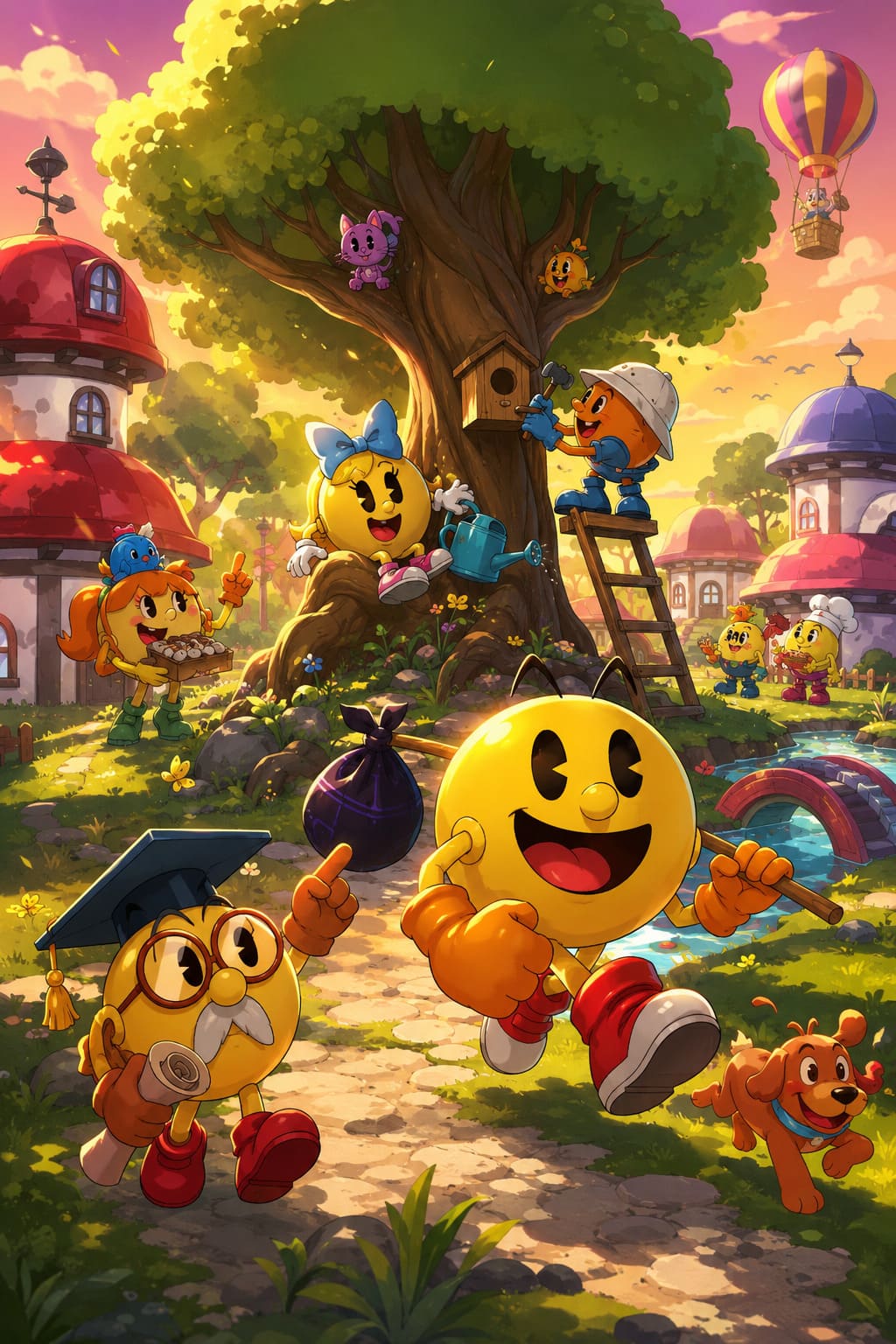
As someone who has spent years jumping between retro arcade classics and modern indie games, I honestly didn’t expect Professor Pac-Man to ever matter again. And yet here we are in 2026, with Pac-Man: Snack Breaks putting him right back into the spotlight.
Dead as Disco Boss Guide: Tactics and Strategies to Beat Every Idol
The Strange Origin of Professor Pac-Man
Back in 1983, when arcades were overflowing with flashing cabinets and quarter-munching competition, Professor Pac-Man arrived with a completely different idea of what a Pac-Man game should be.
Instead of chasing ghosts or navigating mazes, players were suddenly answering quiz questions and solving visual logic puzzles. It felt less like an arcade game and more like a classroom experiment disguised in neon colors.
The original release included over 500 trivia and logic-based questions, early attempts at multiplayer quiz gameplay, and a slower, more deliberate pace compared to arcade norms. Built on aging Midway hardware, the experience was technically interesting but commercially disconnected from what arcade audiences expected at the time.
Only around 400 cabinets were ever produced, and the game quickly became a commercial failure. Most machines were reportedly converted into other Pac-Man titles, which effectively erased it from mainstream memory and turned it into one of the rarest oddities in arcade history.
From Failure to Character Evolution
What’s interesting is that while the game disappeared, the Professor Pac-Man character survived. Over time, Bandai Namco slowly reintroduced him, reshaping him into something far more flexible than a quiz-show host.
He eventually became a mentor figure in Pac-Man World, a mission guide in Pac-Man: Adventures in Time, and a tutorial-style instructor in mobile titles like Pac-Man Pop!. His transformation wasn’t sudden, but gradual, as if the franchise kept testing how much space this forgotten character could occupy.
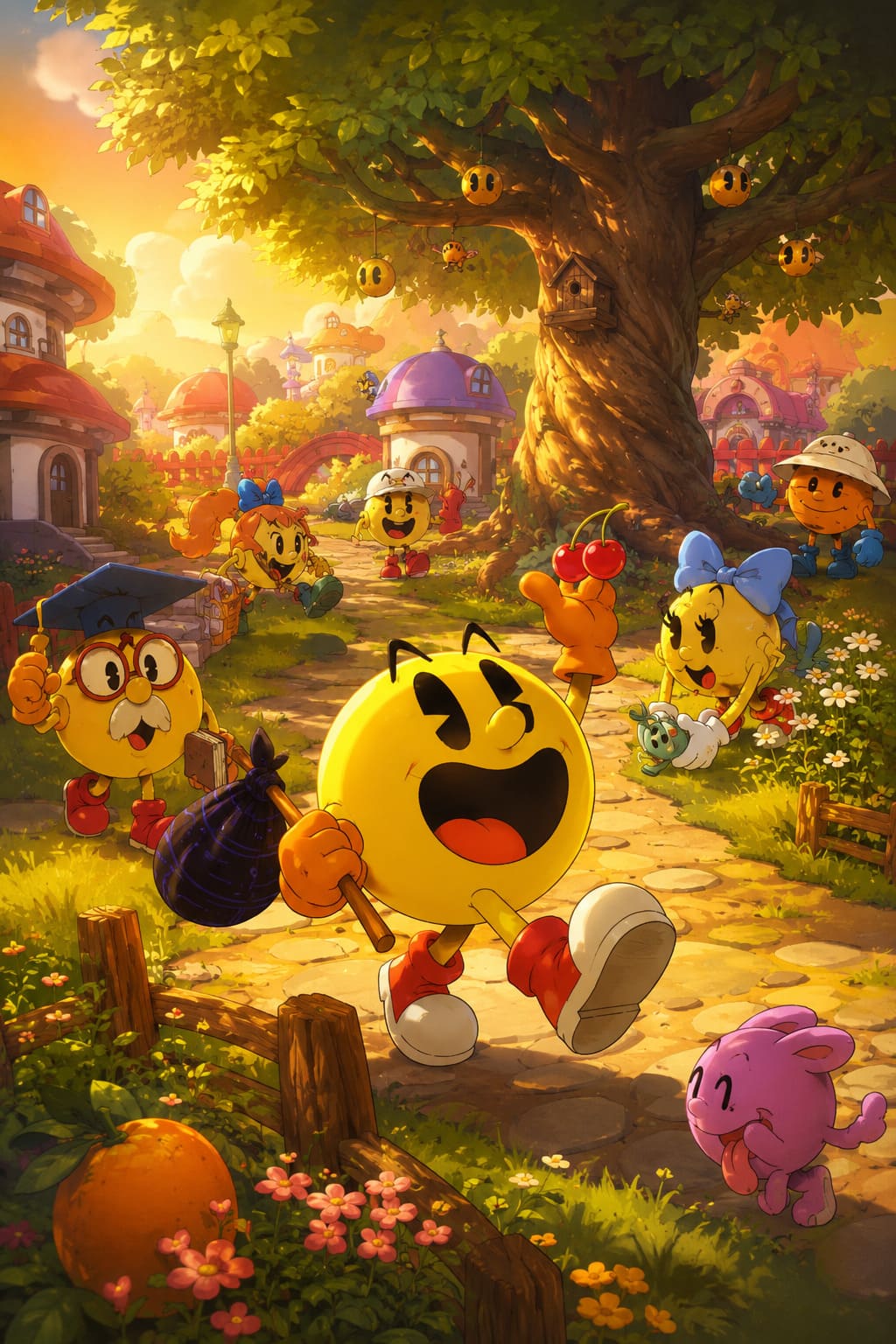
His design evolved as well, gaining spectacles, a white mustache, and an academic mortarboard. The modern version feels less like a relic and more like a stable anchor in the Pac-Man universe.
Pac-Man: Snack Breaks (2026) — A New Direction
Fast forward to 2026, and Pac-Man: Snack Breaks arrives as a 2D animated web series produced by Cartuna in collaboration with Bandai Namco Entertainment America. Released as part of the PAC-MAN Day 45th anniversary celebration, the series marks a shift toward episodic storytelling rather than traditional long-form animation.
The story follows Pac-Man as he leaves Pac-Village and travels to a neon-heavy metropolis called New Pac-City. The series blends retro anime aesthetics with modern digital pacing, creating a style that feels both nostalgic and fresh.
Episodes are released as monthly shorts on YouTube, focusing on fast-paced adventures, Ghost Gang encounters, and a more expressive version of Pac-Man’s world.
Professor Pac-Man’s Role in Snack Breaks
In Snack Breaks, Professor Pac-Man becomes far more than a background reference. He is integrated directly into the structure of the series, functioning as both mentor and lore keeper.
He helps bridge the traditions of Pac-Village with the chaotic energy of New Pac-City, often appearing in segments that explain core gameplay logic in-universe.
His role can be broken down into several key functions:
- Mentor and lore guide for Pac-Man
- Translator of gameplay mechanics into narrative explanations
- Provider of educational “break segments” within episodes
- Meta-commentary voice that connects audience and story
These segments often explain mechanics like power pellet effects, ghost behavior, and maze strategy in a way that feels natural rather than instructional.
Personality Shift: 1983 vs 2026
One of the most noticeable changes in the 2026 interpretation is the personality shift. The Professor is no longer a static quiz host but a dynamic and expressive mentor figure.
In earlier versions, he was primarily serious and instructional, serving a narrow gameplay function. In Snack Breaks, he feels more playful, eccentric, and reactive to the chaos around him.
This evolution gives him more presence in scenes and allows him to function as both comic relief and narrative anchor depending on the episode.
Why Professor Pac-Man Is Trending Again
The renewed interest in Professor Pac-Man across gaming communities is driven by several overlapping cultural factors. The first is the fascination with lost media and rare arcade history, which has grown significantly through YouTube documentaries and retro gaming channels.
Another major factor is the resurgence of retro-inspired animation styles. Snack Breaks taps directly into this aesthetic, appealing to both older fans and younger audiences who consume short-form animated content online.
Additionally, the educational framing of the character makes him appealing for family-friendly viewing, which strengthens his presence in modern digital spaces.
The Bigger Strategy Behind Snack Breaks
Snack Breaks is not just a nostalgic revival but part of a broader strategy to expand the Pac-Man universe into layered storytelling. Instead of treating Pac-Man as a single arcade legacy, the franchise is building a world where characters have continuity, history, and evolving roles.
Professor Pac-Man is especially important in this structure because he naturally connects gameplay logic with narrative exposition. His presence allows the series to explain mechanics without breaking immersion, turning education into storytelling.
Personal Perspective as a Gamer
From a gaming perspective, Professor Pac-Man’s return is unexpected but strangely fitting. He represents a part of gaming history that was initially rejected but later reinterpreted through modern design sensibilities.
What makes him work in 2026 is not nostalgia alone, but reinvention. The franchise didn’t just bring him back; it redefined what he means within the world of Pac-Man.
He now functions as a bridge between eras, connecting arcade experimentation with modern interactive storytelling.
Final Thoughts
Professor Pac-Man’s journey from a failed 1983 quiz arcade game to a central mentor in Pac-Man: Snack Breaks is a rare example of long-term character redemption in gaming culture.
What once seemed like a forgotten experiment has become a meaningful part of a modern animated universe, proving that even the most obscure ideas can find relevance decades later.
In 2026, he is no longer just a curiosity from arcade history. He is an active part of Pac-Man’s evolving identity, guiding both the character and the audience through a world that continues to reinvent itself.