Is Machine Party Multiplayer Online Co-Op? Complete 2026 Meta Strategies and Gameplay Guide
I wasn’t expecting Machine Party to become one of the biggest surprises of 2026.
When I first saw the trailers, I assumed it would be another indie horror experiment that would trend on social media for a week before everyone moved on. Instead, after spending several hours watching gameplay, reading community discussions, and jumping into matches myself, I realized the game is doing something most multiplayer titles never even attempt.
It takes the friendly chaos of classic party games and twists it into a brutal psychological competition where every decision matters.
If you’ve been wondering whether Machine Party is actually an online co-op game or just another PvP experience wearing a different label, the answer isn’t as simple as Steam’s tags suggest. Technically, yes—it supports online co-op—but in practice, this is one of the most deceptive multiplayer games I’ve played in years.
Let’s break down how it actually works, why it’s attracting so much attention, and what strategies are already separating experienced players from newcomers.
Is Machine Party Really Online Co-Op?
The short answer is yes, but don’t expect teamwork in the traditional sense.
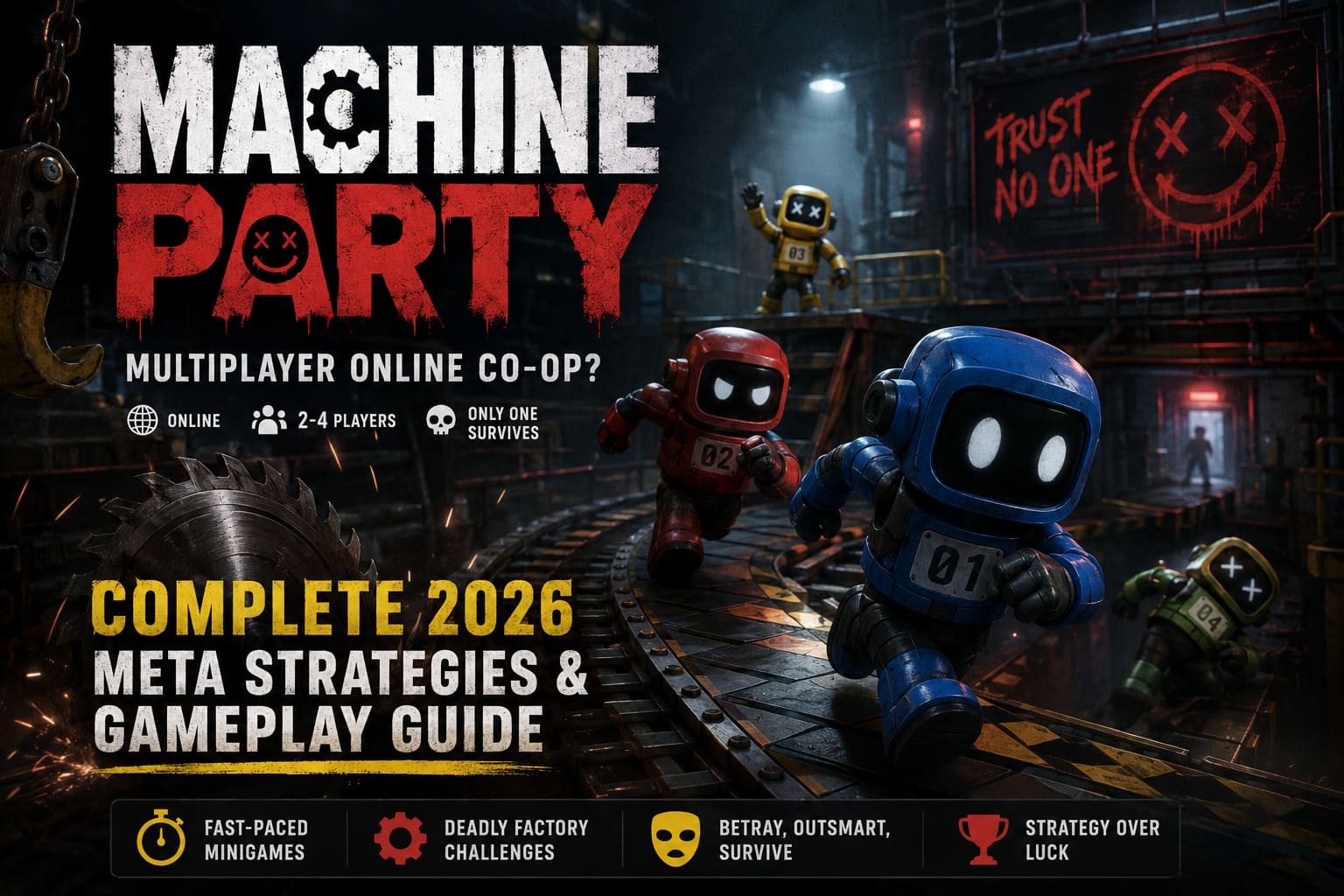
Unlike games where everyone shares the same objective, Machine Party throws 2 to 4 players into deadly industrial testing chambers where only the strongest, smartest, or luckiest participant is likely to survive.
You’re entering the same match together.
You’re facing the same hazards.
But you’re definitely not working toward the same ending.
That’s what makes the game fascinating.
At first, everyone naturally tries helping each other. You warn friends about traps, avoid pushing them into danger, and generally play as though cooperation matters.
Eventually reality sets in.
One player has to fail.
Soon after, another.
Then someone realizes eliminating a competitor increases their own chances of surviving.
That’s the exact moment Machine Party transforms from a party game into psychological warfare.
A Party Game Wearing a Horror Mask
One of the smartest design decisions is how the developers avoid relying on cheap jump scares.
Instead, tension comes from uncertainty.
Every minigame lasts only a short time, but every second feels important because mistakes usually have immediate consequences.
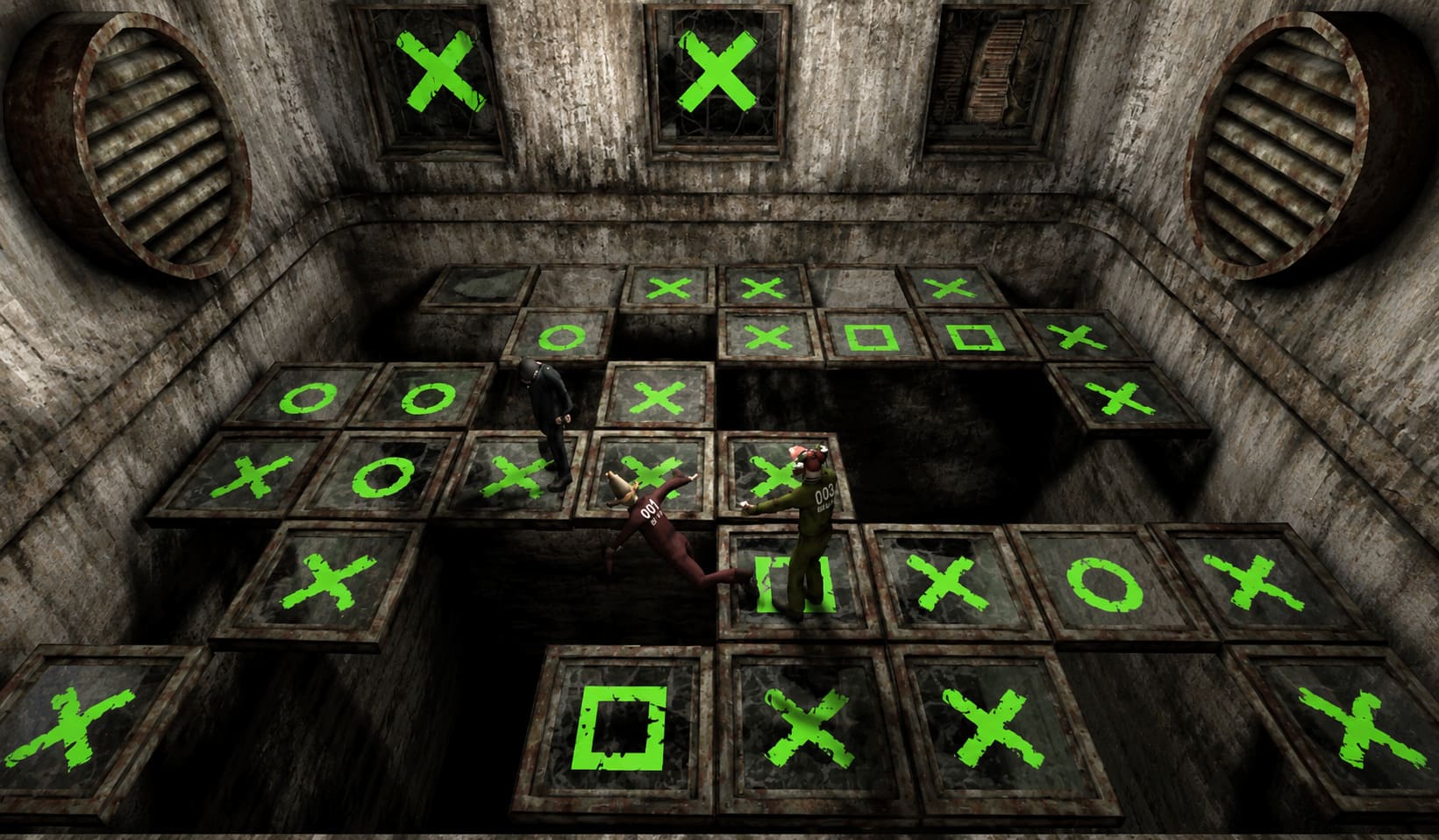
Rather than exploring large maps or solving lengthy puzzles, players move through a sequence of compact industrial challenges inspired by factory machinery, dangerous automation, and dark humor.
Some events focus entirely on quick reflexes.
Others reward observation.
Several seem intentionally designed to encourage betrayal.
That constant variety keeps matches surprisingly fresh.
Even after multiple rounds, I never felt like I could completely predict what was coming next.
Why Every Minigame Feels Different
The collection of industrial challenges is probably Machine Party’s biggest strength.
Instead of repeating similar objectives, the game constantly changes what it expects from players.
You’ll encounter situations involving:
- assembling machinery under intense time pressure
- avoiding massive environmental hazards
- surviving dangerous factory equipment
- completing bizarre secret objectives
- racing through deadly obstacle sequences
Some moments are genuinely funny.
Others become incredibly stressful.
The contrast between absurd comedy and industrial horror creates a strange atmosphere that somehow works far better than I expected.
One minute everyone is laughing.
The next, someone is crushed by machinery while another player quietly celebrates surviving another round.
The Biggest Mistake New Players Make
The most common misconception is believing aggression wins matches.
It doesn’t.
At least not immediately.
One thing I noticed while watching experienced players is how patient they are.
Instead of attacking every opportunity, they wait until another player is already under pressure.
That’s usually when positioning becomes more valuable than raw speed.
A well-timed block or subtle interruption often accomplishes more than openly chasing another competitor.
Machine Party rewards calculated decisions far more than reckless behavior.
Multiplayer Breakdown
| Feature | My Take |
|---|---|
| Online Multiplayer | Smooth and easy to jump into |
| Lobby Size | Best with a full group of friends |
| Co-Op Elements | Shared objectives exist briefly, but rarely last |
| Competitive Focus | Extremely high |
| Replay Value | Excellent because matches rarely unfold the same way |
| Learning Curve | Moderate but rewarding |
Strategies That Actually Help You Win
After watching high-level gameplay and experimenting with different approaches, a few patterns became obvious.
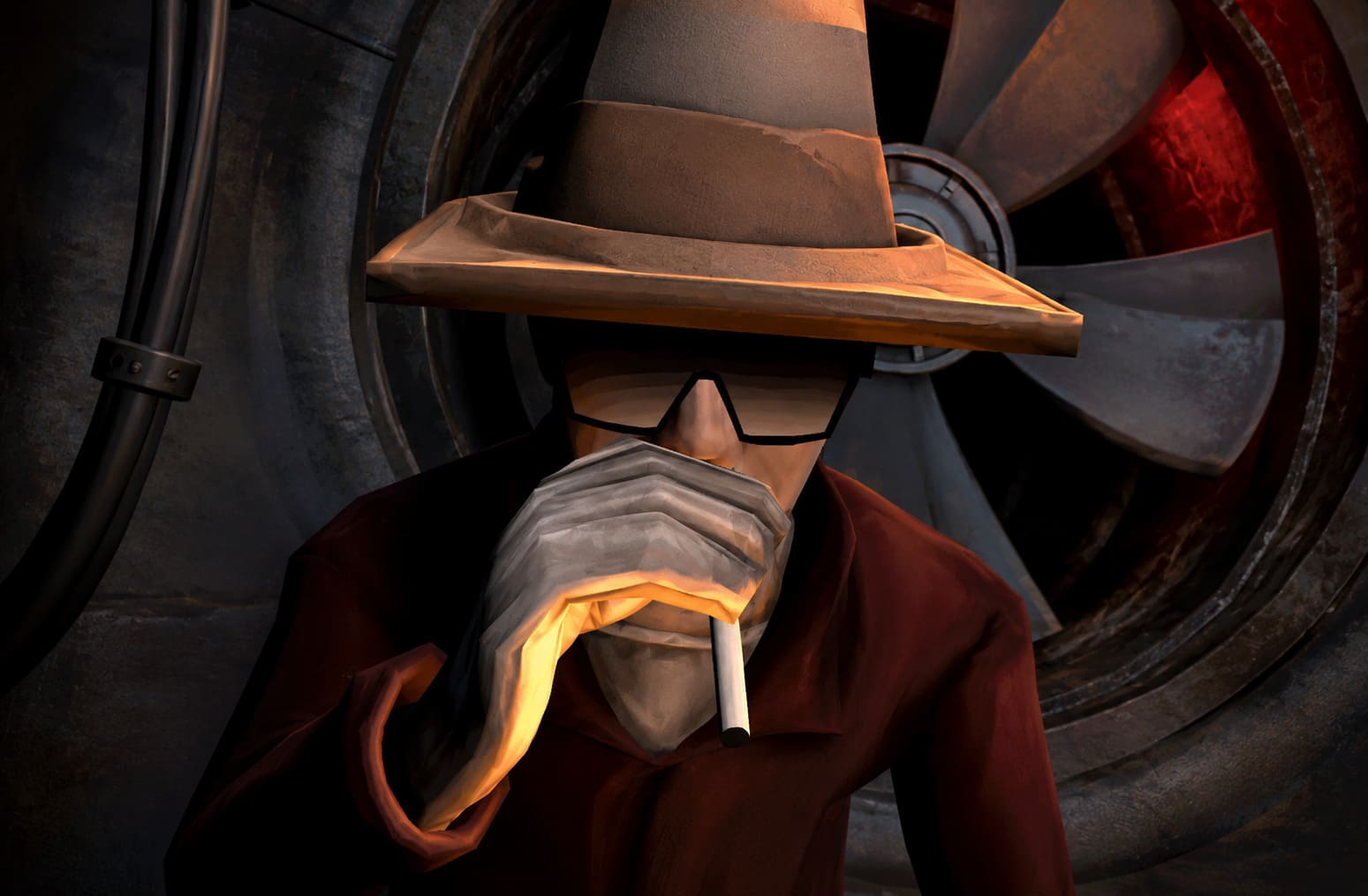
1. Stay Unpredictable
Many players develop habits surprisingly quickly.
If you always run toward obvious safe zones or take the fastest route, observant opponents will exploit that.
Changing your movement regularly forces others to hesitate.
Sometimes hesitation is all you need.
2. Ignore the Mind Games
Machine Party is filled with distractions.
Players intentionally panic, fake mistakes, or bait others into making emotional decisions.
I’ve learned that reacting to every fake movement usually creates more problems than ignoring it altogether.
Focus on your own objective first.
Everything else comes second.
3. Learn Environmental Timing
Most eliminations aren’t caused directly by another player.
They’re caused by hazards.
- Moving machinery
- Rotating blades
- Passing trains
- Factory equipment
The best players memorize these patterns instead of relying on quick reactions every round.
Once hazard timing becomes familiar, surviving becomes dramatically easier.
4. Speed Isn’t Always the Answer
Certain assembly-style minigames encourage frantic button presses.
Ironically, slowing down slightly often produces better results.
One misplaced component wastes far more time than a careful extra half-second.
Consistency beats panic.
Every time.
The Visual Style Deserves More Credit
I genuinely think Machine Party’s presentation is one of the reasons it stands out in such a crowded indie market.
Everything feels intentionally dirty.
- Rust
- Concrete
- Heavy steel
- Industrial lighting
Nothing looks polished in the traditional sense, yet every environment feels handcrafted.
It’s a visual identity that perfectly complements the game’s oppressive atmosphere.
Instead of chasing photorealism, the developers created something memorable.
That’s much harder to accomplish.
Audio That Constantly Builds Pressure
Good horror games understand that sound often matters more than graphics.
Machine Party embraces that philosophy.
The industrial soundtrack gradually intensifies during each challenge.
Mechanical noises become louder.
Factory equipment echoes through narrow corridors.
Countdowns feel increasingly stressful.
Even when nothing dangerous is happening, the audio convinces your brain that disaster is seconds away.
Very few multiplayer games manage that level of tension.
Character Customization Without Pay-to-Win
Another pleasant surprise is the customization system.
Players can personalize their test subjects using industrial clothing, helmets, hazard gear, and various cosmetic accessories.
Thankfully, none of these items affect gameplay.
Everyone enters each match on equal footing.
Winning depends entirely on mechanical skill, awareness, and decision-making—not cosmetics.
That keeps the competitive experience fair.
Performance on PC
Optimization deserves praise as well.
Machine Party runs surprisingly well considering how much physics interaction occurs during matches.
Storage requirements are tiny compared to modern multiplayer games, making installation almost effortless.
For most PC players, the requirements should be approachable.
| Component | Recommendation |
|---|---|
| Operating System | Windows 11 |
| Processor | Dual-Core 2.4 GHz or better |
| Memory | 8 GB RAM |
| Graphics | GTX 1660 / Radeon RX 6500 XT |
| Graphics API | Vulkan Support Required |
| Storage | Around 1 GB Available Space |
Even on modest hardware, performance remains impressively stable during chaotic multiplayer sessions.
How to Fix Corsair Cove Crash on Launch & Stuck on Loading Screen (2026 PC Guide)
Is It Better With Friends?
Absolutely.
Random matchmaking can still be entertaining, but the game reaches another level when everyone knows each other.
Friends remember betrayals.
They form temporary alliances.
They make promises they have absolutely no intention of keeping.
Then someone breaks the deal five seconds later.
Those unscripted moments create stories you’ll laugh about long after the match ends.
That’s something matchmaking with strangers simply can’t reproduce.
Final Thoughts
Machine Party isn’t trying to compete with traditional cooperative games, and that’s exactly why it succeeds.
Instead of rewarding friendship, it constantly tests it.
Instead of encouraging teamwork, it quietly asks how long you’ll remain loyal before self-preservation takes over.
Personally, I think that’s the game’s greatest achievement.
Behind the bizarre humor, rusty factories, and absurd minigames is an incredibly smart multiplayer design that understands people almost as well as it understands game mechanics.
If you’re searching for another relaxing party game, this probably isn’t it.
But if you enjoy unpredictable multiplayer sessions where every round becomes a battle of reflexes, psychology, positioning, and perfectly timed betrayal, Machine Party is one of the freshest indie releases I’ve played this year.
The biggest lesson I learned after countless brutal eliminations is surprisingly simple.
Don’t trust the smiling player standing next to you.
They’re probably waiting for the perfect moment to push you straight into the machine.