Valheim 1.0 Solo vs. Co-op: Definitive Guide to Difficulty, Scaling, and Progression
After spending a lot of time in survival games, from hardcore crafting sandboxes to more relaxed co-op adventures, I’ve learned that the same game can feel completely different depending on who is sitting beside you. Valheim is probably one of the best examples of that. Playing alone turns it into a slow, atmospheric survival journey where every mistake is yours, while playing with friends can transform the same world into a ridiculous Viking road trip full of disasters, arguments over resources, and stories you remember years later.
With Valheim 1.0 finally arriving after its long Early Access journey, the solo-versus-co-op question becomes even more interesting. The full release brings the game to its intended final structure, including the Deep North, broader platform support, crossplay improvements, and balance changes that affect progression and combat. If you are wondering whether Valheim is better solo or with friends, there isn’t a simple answer. I’ve played enough survival games to know that the real question is what kind of experience you want from Valheim.
How to Name Tames in Valheim: Ultimate Guide to Renaming Pets
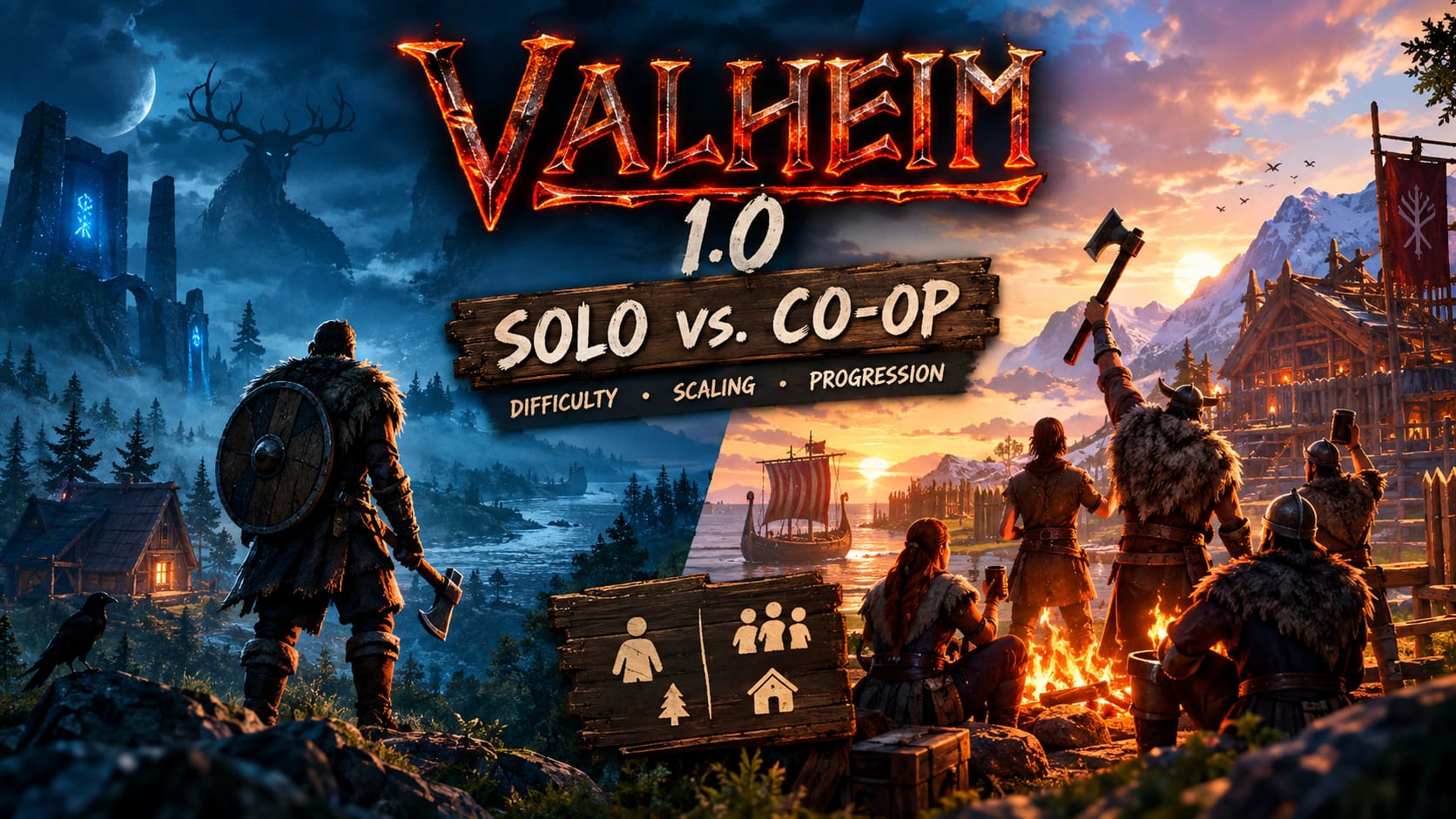
Valheim 1.0 Solo vs. Co-op at a Glance
| Category | Solo | Co-op |
|---|---|---|
| Combat | More personal and demanding | Easier with coordination, but enemies scale |
| Resource Gathering | Less total gear required | Faster through division of labor |
| Exploration | Quiet and dangerous | Safer and more chaotic |
| Building | Relaxed personal project | Large shared settlements |
| Progression | Completely self-paced | Faster when the group works together |
| Atmosphere | Lonely and immersive | Social and unpredictable |
Combat Feels Very Different When You Add Players
One of the first things you notice when switching between solo and multiplayer Valheim is how much the rhythm of combat changes. Alone, every enemy encounter demands attention. You have to watch stamina, food buffs, weapon durability, positioning, and your surroundings because there is nobody nearby to save you when a fight goes sideways. That tension is one of the reasons I enjoy solo Valheim so much: even a routine trip through a familiar biome can suddenly become a serious problem.
Multiplayer gives you another set of advantages. A coordinated group can surround enemies, stagger targets, revive a bad situation, and deal damage from different directions. However, adding players doesn’t simply make everything free. Enemy scaling means larger groups can face tougher encounters, so bringing several inexperienced players isn’t necessarily an automatic win. A teammate who ignores food, charges into every monster they see, or constantly dies can actually make an expedition considerably more difficult.
This is especially noticeable during difficult progression stages. When everyone understands blocking, parrying, stamina management, and enemy behavior, a group can feel incredibly powerful. When nobody knows what they are doing, Valheim quickly becomes a comedy about four Vikings running in different directions while a monster destroys their carefully prepared equipment.
Resource Gathering Is Where Co-op Really Shines
There is no getting around it: Valheim can be grindy. You need wood, stone, food, metals, plants, crafting materials, and plenty of other resources to maintain your character and settlement. In solo play, every one of those jobs belongs to you. When I play alone, I might spend an entire session gathering materials when what I really wanted to do was explore a new biome or work on a building project.
Co-op completely changes that equation. One player can concentrate on farming while another explores dungeons, someone else cuts wood, and another player can work on the base. This division of labor makes a big difference once the amount of required materials starts increasing. A good three- or four-player group can turn what would have been an evening of resource gathering into a relatively short preparation session.
There is a downside, though. More players also means more equipment. A single player only needs one good armor set, one collection of weapons, and enough food for themselves. A group has to supply everyone. Suddenly that ore expedition that seemed unnecessary becomes essential because four people need upgraded gear instead of one.
Solo Valheim Makes Logistics Much More Stressful
Some of my favorite Valheim moments have nothing to do with boss fights. They involve sailing across a dangerous ocean with a ship full of valuable ore and realizing that one stupid mistake could erase an hour of progress. When you are alone, there is nobody watching the map, steering the ship, scouting the coastline, or rescuing you if something goes wrong.
Long-distance metal transportation is particularly memorable. Because valuable ores have traditionally been restricted by portal rules unless you change the relevant world settings, moving materials between distant bases becomes a genuine expedition. A solo player has to plan the route, prepare food, carry the right equipment, and think about where an emergency portal might be useful.
Co-op makes this much more entertaining. One person can steer while another watches for land or enemies, and the rest of the crew can prepare for whatever appears next. If somebody dies, the others can potentially protect the body, recover equipment, or create a safer route back. It turns logistics from a solitary chore into an actual adventure.
The Biggest Difference Is Actually the Atmosphere
Combat and resources matter, but for me, the biggest difference between solo and co-op Valheim is the atmosphere. Solo Valheim feels surprisingly close to survival horror at times. Walking through a dark forest alone, hearing something move nearby, or entering an unfamiliar biome without knowing what is waiting for you creates a level of tension that multiplayer naturally reduces.
The further you progress, the stronger that feeling can become. Dangerous areas such as the Mistlands and the later biomes can feel genuinely hostile when you are alone. You become more careful because there is no one to laugh off the danger with you. When you finally return to your base with your inventory intact, the achievement feels personal.
Co-op replaces that loneliness with something completely different. Suddenly the memorable moments are often caused by your friends rather than the game itself. Somebody chops down a tree and accidentally kills another player, a boat gets destroyed in the worst possible location, an entire party forgets to bring enough food, or everyone runs from a monster while pretending they have a plan. Valheim is incredibly good at creating stories that you could never script.
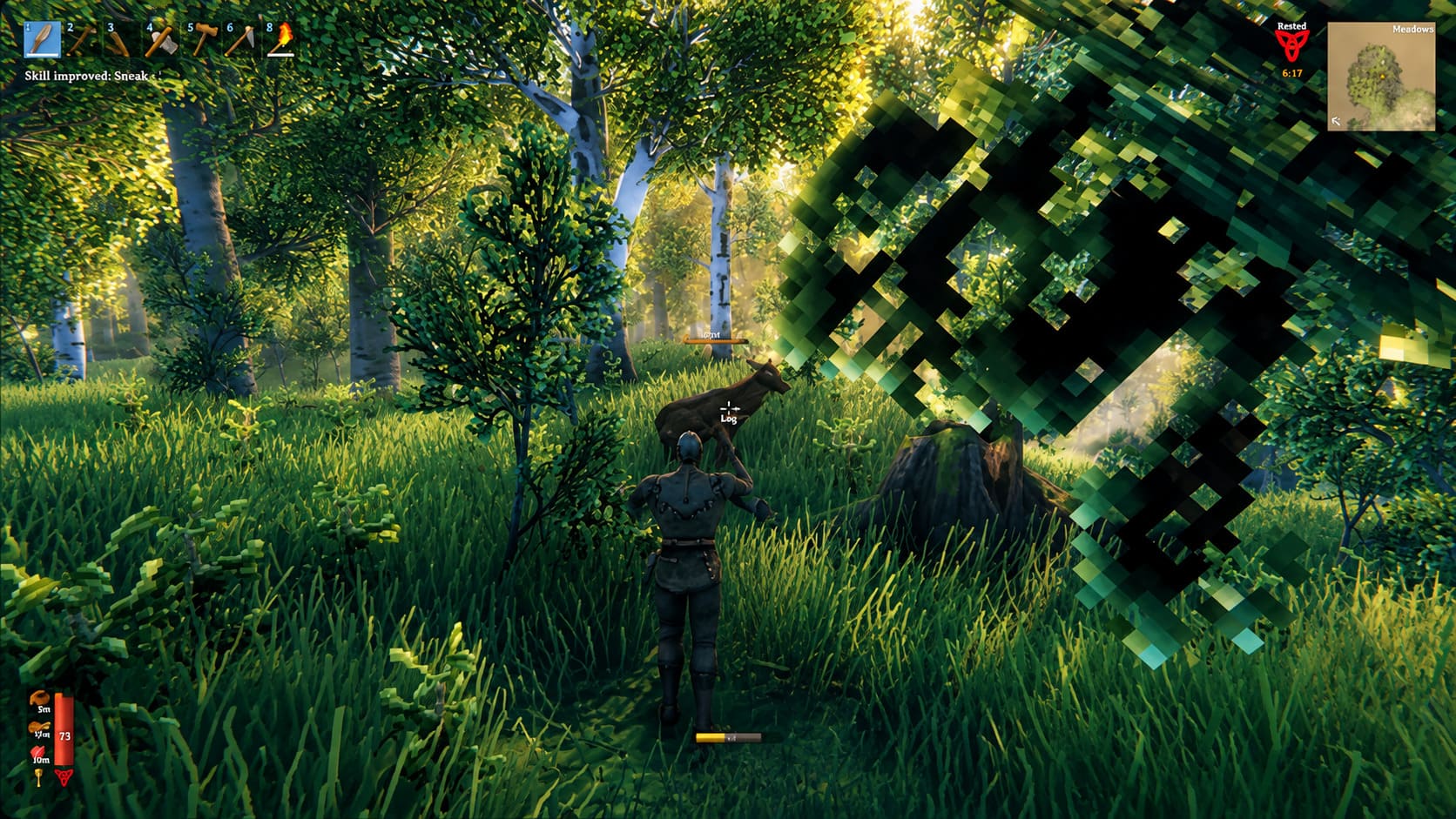
Building Is Better With Friends, But Solo Has Its Own Charm
Building deserves special attention because Valheim’s construction system can become almost a separate game. Solo players have the freedom to create exactly what they want without having to negotiate with anyone. If you want to spend three hours rebuilding a roof because the angle annoys you, nobody is going to complain.
With friends, however, construction can become much more ambitious. A shared settlement can grow into a proper Viking village with workshops, farms, storage buildings, defensive walls, docks, homes, towers, and enormous halls. Even players who aren’t particularly interested in building can contribute by collecting materials or preparing the terrain.
The funniest part is that multiplayer building isn’t always efficient. Someone will inevitably have a different idea about where the main hall should go. Someone else will build something purely because it looks funny. That chaos is part of the appeal. A perfect solo base may look better, but a messy multiplayer settlement often has more personality.
Progression: Faster With Friends, More Personal Alone
Valheim’s progression system works well in both formats, but the feeling is different. Solo progression is slower simply because every responsibility falls on one character. You have to hunt, mine, farm, cook, craft, explore, build, sail, and fight. The advantage is that every milestone belongs entirely to you.
In co-op, progression can move much faster when the team has clearly defined roles. While one player searches for resources, another can prepare food and equipment, and a third can improve the base. The group can then head into a boss fight with everyone properly prepared instead of one exhausted player trying to do everything.
There is one important warning: don’t let co-op turn into a job. If one person becomes permanently responsible for farming, another for mining, and another for construction, the game can start feeling like unpaid work. The best multiplayer sessions are the ones where everyone occasionally changes roles and joins the fun instead of becoming the group’s designated lumberjack.
Which Difficulty Is Better?
If you enjoy challenging yourself mechanically, I’d lean toward solo. Valheim forces you to understand its combat system much more deeply when there is nobody around to cover your mistakes. Learning when to parry, when to retreat, when to eat, and when to simply run away becomes incredibly satisfying.
For most groups, though, co-op is the more accessible choice. You can make mistakes without immediately ending the entire expedition, and newer players can learn by watching more experienced friends. The experience also becomes much less punishing emotionally because a death usually turns into a joke rather than a frustrating solo corpse run.
World Settings Can Change the Equation
One of the best things about modern Valheim is that players aren’t forced to accept one rigid survival formula. World modifiers allow you to adjust aspects of the experience, including resource availability and raid-related settings. This is particularly useful if you love the exploration and building but don’t enjoy repeating the same resource grind for hours.
Personally, I wouldn’t immediately turn every multiplier up to maximum. A large part of Valheim’s satisfaction comes from finally obtaining something after working for it. But if a particular mechanic stops being fun and starts feeling like a chore, changing the settings can be a much better solution than abandoning the world entirely.
My Verdict: Solo or Co-op?
If you want the most immersive version of Valheim, I’d recommend trying solo at least once. The silence, danger, and slow progression reveal a side of the game that can easily disappear when you have three friends shouting over voice chat. It is demanding, occasionally frustrating, and sometimes wonderfully peaceful.
If your priority is memorable stories, teamwork, huge construction projects, and chaotic adventures, co-op is the clear winner. Valheim was practically built for the moment when a simple expedition turns into a disaster involving a boat, a boss, three tombstones, and somebody asking why nobody brought a portal.
But honestly, you don’t have to choose one permanently. The best way to experience Valheim may be to use both. Keep a solo world for personal building projects and slow exploration, then jump into a multiplayer world when you want the social side of the game. That’s the beauty of Valheim: it doesn’t dictate what being a Viking should look like. You can be a lonely warrior exploring an ancient wilderness, or part of a completely dysfunctional clan sailing into danger together. Both versions work, and both can produce some of the best survival-game memories you’ll have.
Final Recommendation
Choose Solo if you value immersion, careful planning, personal progression, challenging combat, and the satisfaction of solving every problem yourself. Choose Co-op if you prefer teamwork, faster progression, large-scale building, shared exploration, and the unpredictable comedy that comes from playing survival games with friends.
For me, solo Valheim is the better survival experience, while co-op Valheim is the better social adventure. If you’ve never played the game with friends, you’re missing one of its strongest features. And if you’ve only played multiplayer, starting a private solo world might surprise you with just how atmospheric and tense this Viking survival sandbox can actually be.