RuneScape Dragonwilds Adamant Crafting Guide: How to Get Umbral Sands Gear
In most survival crafting games, there’s always that one tier of gear where the whole experience suddenly “clicks” into place—you stop feeling fragile and start feeling like you actually belong in the world. In RuneScape Dragonwilds survival crafting game, that moment for me personally came with Adamant gear.
After spending way too many hours wandering deserts, dying to overconfident Kalphites, and burning through tools faster than I care to admit, I can say this without exaggeration: Adamant tier is where the game finally stops forgiving bad preparation. The Fire of Fuzan expansion doesn’t just add content—it reshapes how progression works, especially in the Umbral Sands.
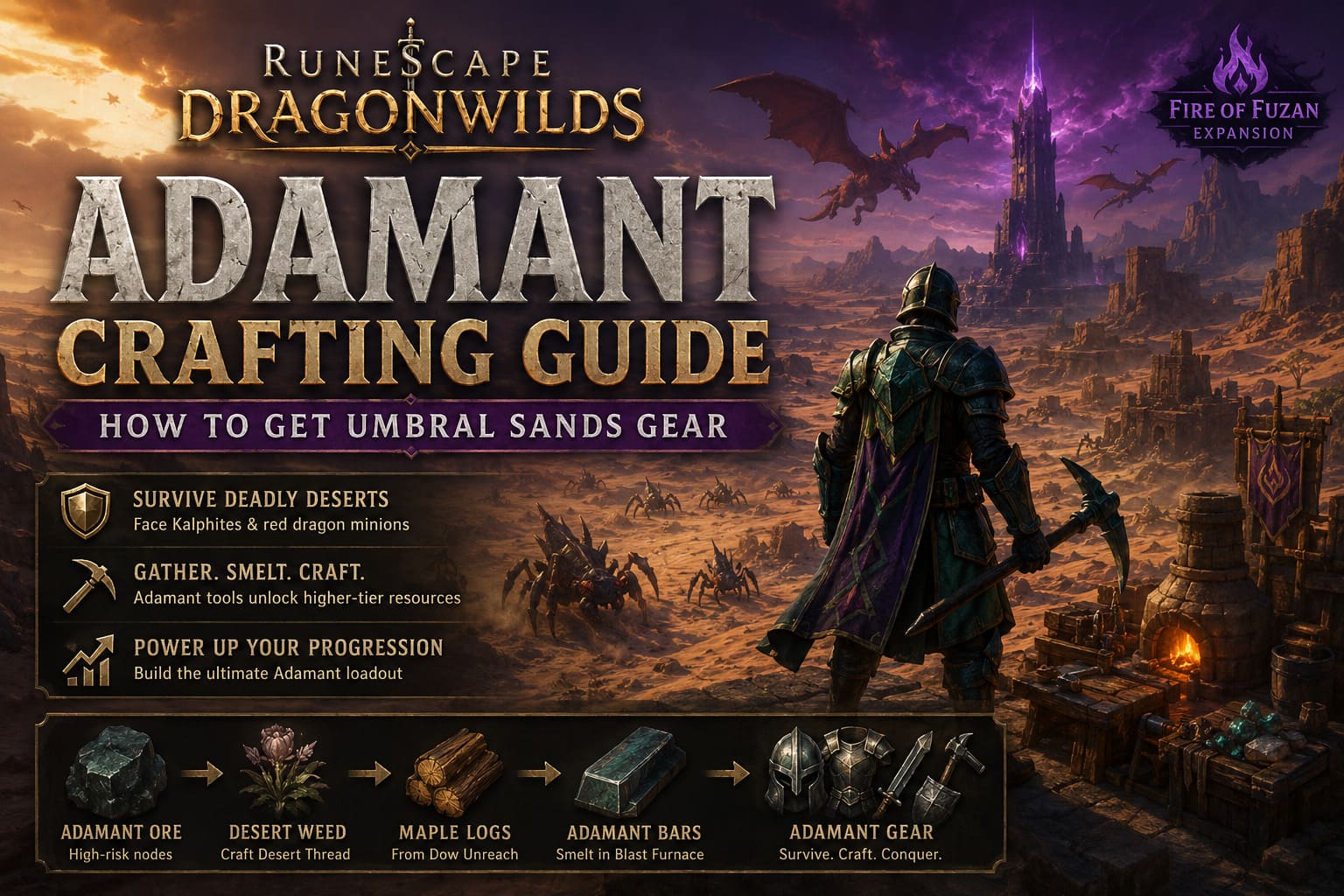
This guide breaks everything down in a practical, player-tested way—no fluff, just what actually works when you’re deep in the desert and your inventory is screaming at you.
RuneScape The Brink of Extinction Quest Guide: Full Walkthrough, Puzzles, and Boss Fight
Why Adamant Tier Actually Matters (From a Player Perspective)
Adamant gear isn’t just “better iron.” It’s a full shift in gameplay pacing.
In older tiers, you can get away with sloppy routes, inefficient crafting, and half-prepared expeditions. Adamant punishes that immediately. But it also rewards you massively once you understand its loop.
Key Benefits of Adamant Gear
- Increases survivability in desert encounters, especially against red dragon minions
- Unlocks mid-to-high tier resource loops
- Speeds up gathering and reduces farming downtime
Everything in the Umbral Sands is tuned around this tier. If you’re not wearing or using Adamant tools, you’re basically playing on hard mode without the rewards.
What You Can Actually Craft With Adamant
Before diving into grinding routes, it helps to understand what you’re working toward. Adamant isn’t just armor—it’s a full ecosystem.
Core Adamant Equipment Set
- Armor: Helmet, Platebody, Platelegs
- Tools: Pickaxe, Logging Axe
- Weapons: Sword, Dagger, Mace, Shield, Greatsword
- Ranged: Shortbow, Crossbow, Elemental Ammo (Fire, Poison variants)
The important thing here is dependency. Many late-game desert materials are locked behind Adamant-tier tools, especially gathering tools like the Logging Axe and Pickaxe.
Step 1: Gathering Materials in the Umbral Sands
This is where most players waste time early on. The Umbral Sands is not a casual resource zone—it’s a route optimization challenge.
Adamant Ore Locations
Adamant Ore nodes are typically found on cliff ridges, near unstable sandstone formations, and in high-risk enemy patrol areas.
You’ll need at least a Tier 6 pickaxe (Mythril or equivalent). Anything lower simply won’t work efficiently.
Practical Tip
Don’t overfarm a single node cluster. Rotating routes is far more efficient due to inconsistent respawn timing.
Desert Thread & Desert Weed
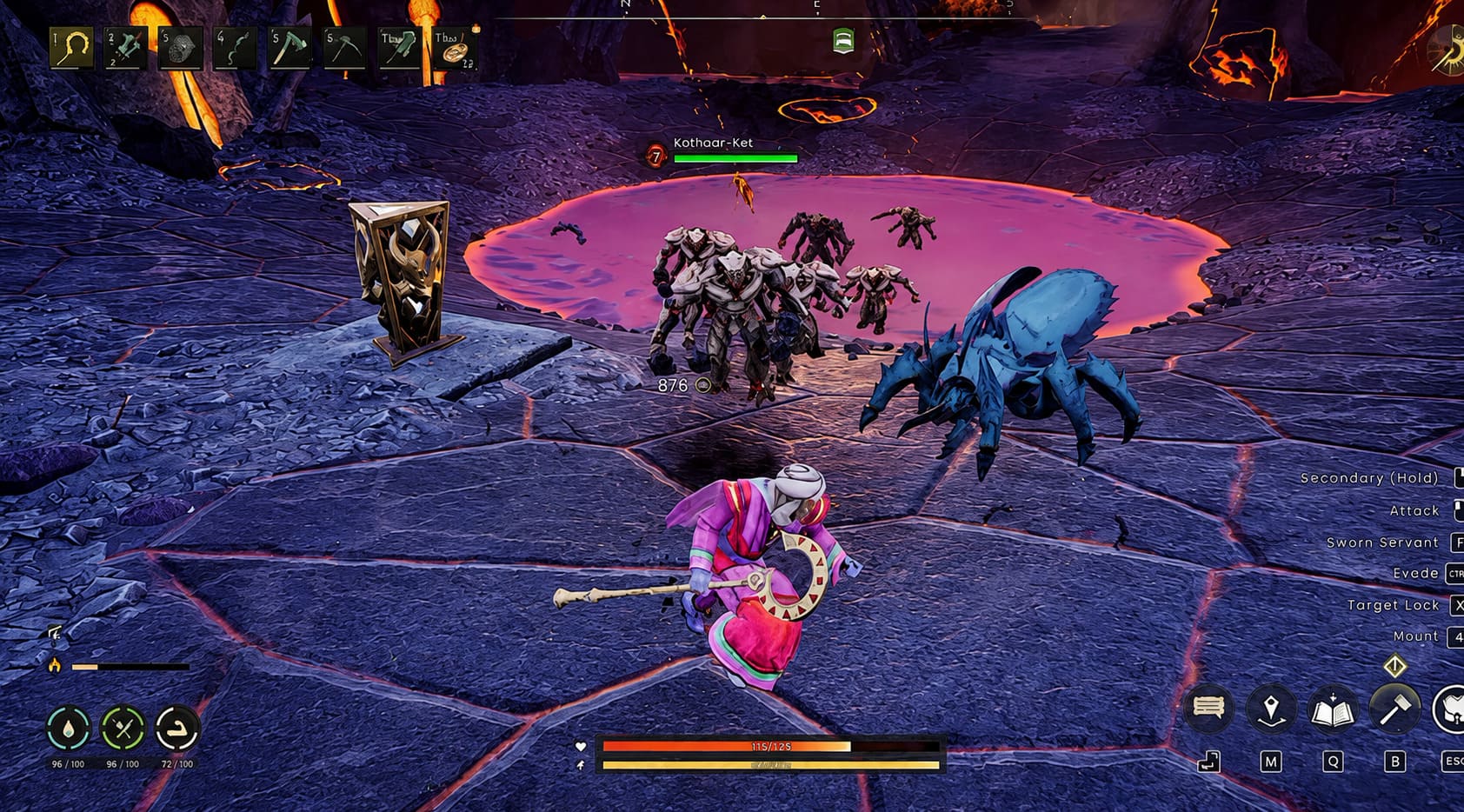
Desert Thread is one of the most annoying early bottlenecks in the expansion. You craft it from Desert Weed, a rare plant scattered across open dunes. It does not cluster, which is intentional design pressure. Once gathered, process it at a Spinning Wheel to create Desert Thread, a core binding material used in almost every Adamant recipe.
Maple Logs (The Unexpected Bottleneck)
Most players underestimate wood in a desert expansion. That’s a mistake.
Maple Logs are primarily found in Dow Unreach and are required for handles, tool construction, and weapon crafting.
Step 2: Refining Adamant Bars
Once materials are gathered, the gameplay shifts from exploration to production management.
You will need a Blast Furnace setup to process Adamant efficiently.
Fuel Pellets Recipe
- Charcoal (kiln or superheated logs)
- Adhesive (environmental drops)
- Coarse Animal Fur (early-game hunting zones)
While simple on paper, inventory management becomes the real challenge here.
Smelting Process
To create Adamant Bars, combine:
- Raw Adamant Ore
- Coal
- Fuel Pellets
Batch crafting is essential. Small-scale smelting slows progression significantly.
Step 3: Crafting Your First Adamant Loadout
Once you have enough bars, thread, and logs, you finally enter the real power spike phase of the game.
Priority Crafting Order
- Adamant Logging Axe (progression unlock tool)
- Adamant Pickaxe (resource efficiency upgrade)
- Helmet + Platebody (survivability core)
- Weapons (combat scaling)
- Ranged gear (flexibility and safety)
Why the Logging Axe Comes First
The Logging Axe unlocks Fibrous Pipe Cactus harvesting, which is required for advanced crafting materials later in progression. Without it, entire crafting branches remain locked.
Efficiency Tips From Real Gameplay
Weight Management
Inventory limits will constantly slow you down. Crafting weight-reduction gear significantly improves farming efficiency and reduces return trips.
Magical Repair System
Manual repairs are inefficient. Once available, Magical Mending should be used instead of consuming crafting materials for maintenance.
Movement Speed Matters
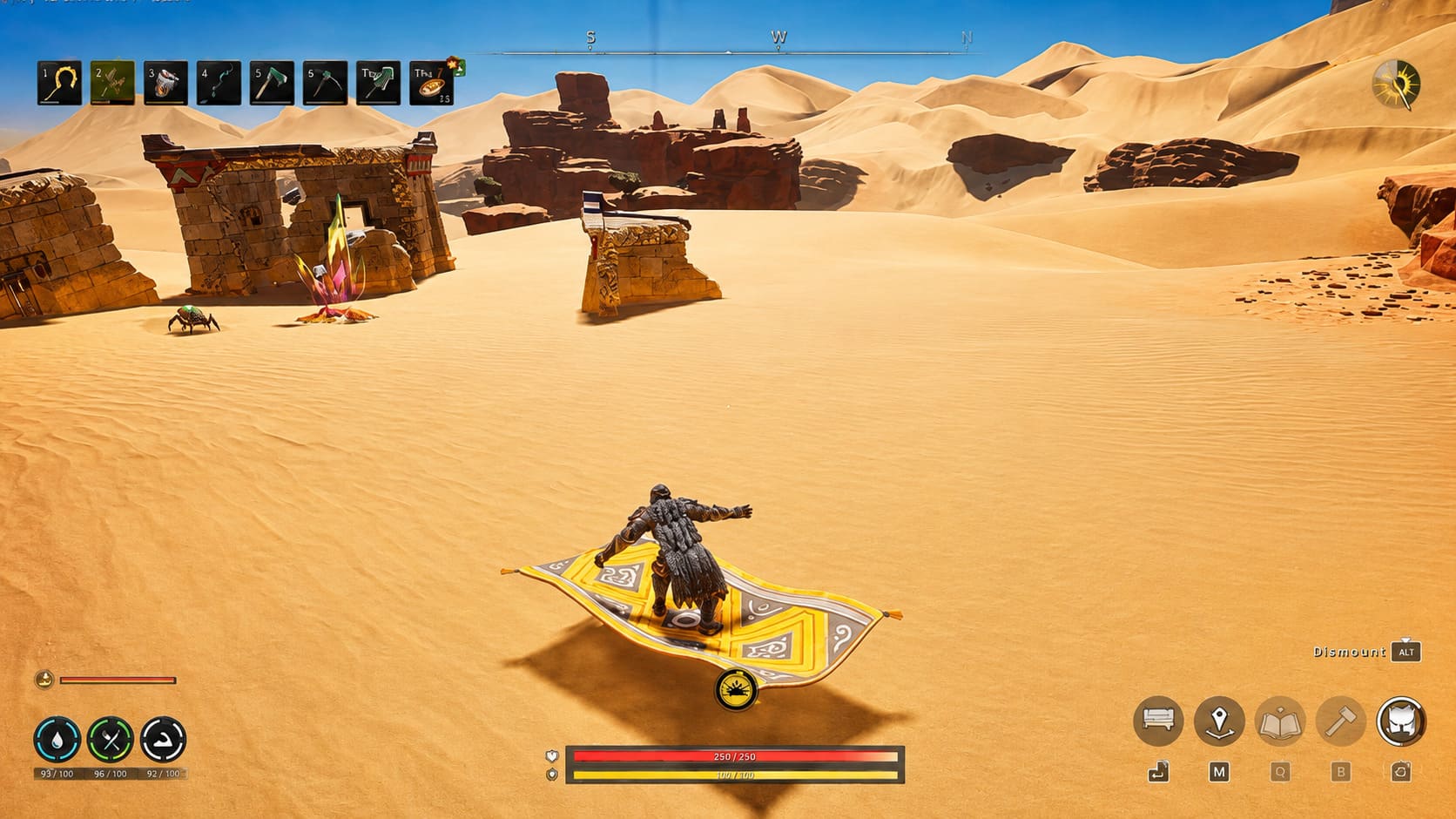
The Umbral Sands is designed to punish slow traversal. Unlocking a Magic Carpet or similar mount early dramatically increases resource farming efficiency and reduces travel downtime.
Final Thoughts
Adamant crafting in RuneScape Dragonwilds survival crafting game is less about individual recipes and more about understanding how the desert economy works as a system. Once you grasp material flow, route efficiency, and crafting hierarchy, the Umbral Sands stops being a punishing zone and becomes a structured progression playground. It’s demanding, sometimes grind-heavy, but extremely satisfying once everything clicks into place.