Valor Mortis PS5 vs Xbox Series X Performance and Graphics Comparison
Some games make you think about graphics first. Others make you worry about performance before you even reach the first boss. For me, a challenging first-person action RPG like Valor Mortis needs both, because a beautiful world means very little if the controls stop feeling reliable during a difficult fight. One badly timed dodge or a parry that feels delayed can turn an exciting encounter into a frustrating trip back to the nearest checkpoint.
Developed by Polish studio One More Level, the team behind Ghostrunner and Ghostrunner 2, Valor Mortis takes a very different approach to action. Instead of sending players through a futuristic city at breakneck speed, it drops them into a twisted version of nineteenth-century Europe, where Napoleon’s military campaigns have helped create a nightmare of supernatural violence. You play as William, a resurrected soldier caught in a world devastated by a deadly Crimson plague.
Does Valor Mortis Have Multiplayer? Full Co-Op and PvP Breakdown for One More Level Fans
That premise immediately caught my attention because it combines several ideas that work particularly well together: aggressive first-person combat, dark historical fantasy, unsettling environments, and the demanding mechanics associated with Soulslike games. The big question for console players is whether the PlayStation 5 or Xbox Series X provides the better experience. Looking at the differences described in available platform comparisons, the most important factors are image quality, frame-rate consistency, controller features, and the overall value of each console ecosystem.
One important caveat: exact resolution figures, measured frame-rate results, and claims about platform-specific performance advantages should be confirmed through controlled technical testing. Without verified benchmark data, small differences between the two versions should be treated as provisional rather than definitive.
Valor Mortis Graphics Comparison: PS5 vs Xbox Series X
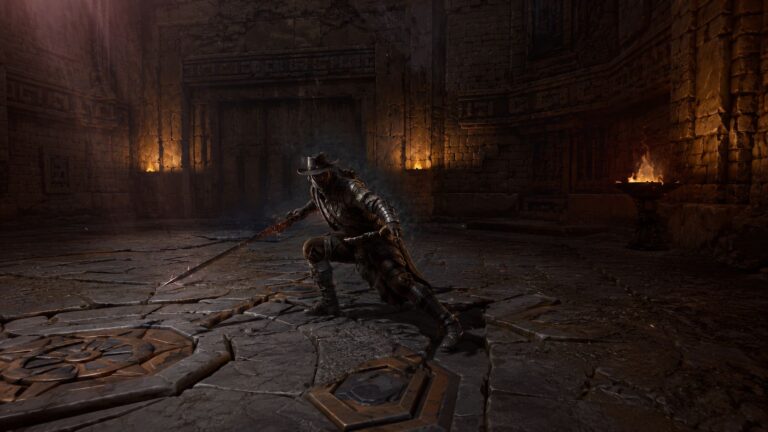
At first glance, there is little reason to expect a dramatic visual gap between the two consoles. Both the PS5 and Xbox Series X are capable machines, and the game’s strongest visual elements come from its art direction as much as its technical presentation. Crumbling settlements, smoke-filled battlefields, sinister underground passages, and grotesque plague-infected enemies give the setting a distinctive identity.
What matters most is how consistently the game presents those details while you are actually playing. A screenshot can make almost any modern action game look impressive, but combat rarely gives you the luxury of standing still and examining the scenery. You are watching enemy movements, looking for attack openings, and trying to understand what is happening through fog, particles, and sudden bursts of supernatural effects.

PlayStation 5: A Brighter and More Vivid Presentation
The PS5 version has been described as delivering a punchier image, with brighter lighting and more saturated colors. If that difference holds up in direct gameplay comparisons, it could make certain environments feel more dramatic, particularly when the Crimson plague introduces unnatural colors into otherwise bleak surroundings.
I can see the appeal of this presentation. Dark fantasy games sometimes push their color grading so far toward gray and brown that individual locations begin to blend together. A little extra vibrancy can help enemies stand out against the environment and make supernatural effects easier to read during a chaotic encounter.
However, brighter does not automatically mean better. In a game built around oppressive atmosphere, lighting needs to preserve the sense that danger could be hiding around every corner. If highlights become too strong or shadows lose subtle detail, the image may look more immediately striking without necessarily feeling more convincing.
Xbox Series X: Contrast and Atmospheric Detail
The Xbox Series X presentation has been characterized as slightly more restrained, with deeper shadows and a moodier overall appearance. That approach could work particularly well in underground areas, abandoned buildings, and other locations where darkness is an important part of the atmosphere.
For me, this is the sort of comparison where personal preference matters more than a simple winner-takes-all verdict. Some players want a clean, vivid picture that makes every weapon and enemy easy to distinguish. Others prefer a heavier, more cinematic image that preserves the unsettling character of the world.
The underlying character models, weapons, and environmental assets appear to be broadly comparable in the descriptions available. There is no solid reason to assume that one console delivers a fundamentally superior graphical experience without verified side-by-side measurements.
| Graphics Feature | PlayStation 5 | Xbox Series X |
|---|---|---|
| Overall presentation | Described as brighter and more saturated | Described as darker and more contrast-heavy |
| Character and weapon detail | Expected to be broadly comparable | Expected to be broadly comparable |
| Lighting preference | Suits players who enjoy vivid highlights | Suits players who prefer a moodier image |
| Overall visual winner | Depends on personal taste | Depends on personal taste |
Resolution and Image Sharpness: Does Xbox Have an Advantage?
Resolution is one of those technical specifications that sounds more important than it sometimes feels during actual gameplay. A higher internal rendering resolution can preserve finer details, but the final picture also depends on reconstruction techniques, anti-aliasing, texture quality, and the complexity of the scene.
Both console versions are described as targeting a 4K output, with dynamic resolution scaling potentially reducing internal rendering resolution when the action becomes demanding. This approach is common in modern games because rendering every frame at a fixed native resolution can consume resources that might otherwise be used to maintain performance.
The distinction between output resolution and native rendering resolution is important. A game can produce a 4K signal without rendering every pixel at native 4K resolution throughout the entire experience. Temporal reconstruction can produce a sharp image from a lower internal resolution, although fast movement, particles, and complicated lighting can sometimes reveal artifacts.
Claims that the Xbox Series X maintains a higher internal resolution during demanding scenes need proper measurements before they can be considered established facts. The same applies to suggestions that the PS5 scales down more aggressively during boss fights. Without reliable pixel counts and matched gameplay captures, I would not choose a console based on these alleged differences alone.
My advice is to prioritize the image as it looks during movement and combat, not just the resolution number on a specification sheet. In a fast first-person action RPG, stable presentation and clear enemy animations are often more valuable than a marginal improvement in image sharpness.
Performance and Frame Rate: The Most Important Comparison
Graphics can make a strong first impression, but performance is where Valor Mortis has the most to prove. Soulslike combat demands precision, and the first-person perspective makes responsiveness especially important. When an enemy begins a heavy attack, players need to recognize the animation, judge the distance, and react without feeling that the game is working against them.
The available descriptions indicate a target of 60 frames per second on both consoles. That would be a sensible goal for a game featuring parries, dodges, rapid melee attacks, and quick changes in direction. A consistent 60 FPS experience can make combat feel substantially more responsive than a presentation with frequent fluctuations, even when both versions have similar graphical detail.
The key word is consistent. A frame-rate target is not proof that the game maintains that rate in every situation. Exploration through relatively quiet environments places different demands on the hardware than a boss encounter filled with particles, multiple enemies, physics effects, and complex animations.
Some early descriptions suggest that the Xbox Series X may hold its target more consistently during particularly demanding encounters, while the PS5 may experience occasional dips into the mid-50s. Those claims should be treated cautiously unless supported by reproducible testing, because isolated observations cannot establish a reliable performance gap.
There is also a difference between a small frame-rate fluctuation and a more serious frame-pacing problem. Even when average performance looks acceptable, uneven frame delivery can make movement feel less smooth. That distinction is especially relevant when you are learning an enemy’s attack patterns and relying on precise timing to survive.
For anyone deciding between the two consoles, I would put performance stability ahead of tiny differences in texture sharpness. However, until comparable frame-time data confirms a meaningful advantage for either platform, I would consider 60 FPS the shared target rather than declaring a definitive performance winner.

Combat, Controls, and the Importance of Responsiveness
Valor Mortis sounds like the kind of game where small mechanical differences can have a major impact on how much you enjoy the experience. If you have played demanding action games such as Sekiro: Shadows Die Twice or Lies of P, you already know how quickly combat can become frustrating when defensive timing feels inconsistent. A successful parry is satisfying because it rewards the player’s judgment, not because the game occasionally decides to cooperate.
That makes input responsiveness a more meaningful consideration than a minor difference in lighting. Both consoles should offer a capable foundation for this type of gameplay, but the quality of the final experience also depends on the game’s implementation, frame pacing, controller response, and individual settings.
I would pay particular attention to how William’s attacks connect, how quickly the character responds to dodges, and whether parry timing feels predictable during demanding encounters. These are the details that can make a difficult action RPG feel challenging in a good way rather than unfair. Until independently measured testing establishes a difference, however, there is no compelling reason to assume that one console has inherently better combat mechanics.
PS5 DualSense vs Xbox Controller
One of the clearest reasons to consider the PlayStation 5 version is the DualSense controller. Its adaptive triggers and haptic feedback can add another layer of physical feedback to games that take advantage of those features.
If Valor Mortis uses these capabilities as described, firing William’s flintlock pistol could provide resistance through the trigger, while different environmental interactions could produce distinct vibrations. These details are not going to transform the underlying combat system, but they can make actions feel more physical and help reinforce the game’s grim atmosphere.
The Xbox controller offers a different kind of appeal. It has a familiar layout, comfortable ergonomics, and a straightforward design that many players already prefer. For extended sessions involving repeated boss attempts, controller comfort can matter more than a collection of extra features.
There is an important distinction between general DualSense capabilities and confirmed game-specific support. The presence of adaptive triggers in the controller does not automatically prove that every weapon or environmental interaction has a custom implementation. Players interested in these features should verify the extent of Valor Mortis’s support before treating them as a decisive reason to purchase the PS5 version.
Xbox Game Pass and Overall Value
Performance is only one part of the decision. Price and accessibility can be just as important, particularly for players who already have several games waiting in their libraries.
If Valor Mortis is available through an existing Xbox Game Pass subscription in the player’s region and at the relevant time, that could make the Xbox version the more attractive financial choice. Access through a subscription may allow players to try the game without paying its full standalone price, although subscription availability and terms can change.
The PS5 version may make more sense for someone who primarily plays on PlayStation, values the DualSense experience, or prefers to build a permanent collection of individually purchased games. Neither approach is universally better; it depends on how you use your console and how much you are willing to spend.
Xbox Cloud Gaming availability also needs to be checked separately. Not every game included in a subscription automatically supports cloud streaming, and supported devices, regions, and subscription tiers can affect access.
Final Verdict: Should You Play Valor Mortis on PS5 or Xbox Series X?
Valor Mortis has an appealing foundation: a twisted version of Napoleonic Europe, first-person combat, supernatural horror, and the promise of demanding encounters. One More Level’s experience with fast-paced action makes this a particularly interesting change of direction, although the finished experience will ultimately stand or fall on its combat, level design, and technical execution.
Based on the described differences, I would make the console decision according to your priorities rather than treating small graphical variations as a decisive victory for either machine.
Choose the PlayStation 5 If:
- You prefer a brighter, more saturated visual presentation.
- You want to benefit from compatible DualSense haptic feedback and adaptive triggers.
- PlayStation is already your primary gaming platform.
Choose the Xbox Series X If:
- You prefer a darker, more contrast-heavy image.
- You can access the game through Game Pass on favorable terms.
- You already use the Xbox ecosystem and value its convenience.
My biggest recommendation is not to get caught up in claims about tiny resolution differences before reliable technical testing is available. In a demanding action RPG, a stable frame rate, responsive controls, and readable enemy animations will have a much greater impact on enjoyment than a subtle difference in color saturation.
Ultimately, neither the PS5 nor the Xbox Series X can be declared the definitive technical winner from the available descriptions alone. Both are promising options, and the better choice depends on controller preference, subscription access, and the kind of visual presentation you enjoy. If you are particularly sensitive to frame drops, wait for a direct comparison that includes frame-time graphs and demanding combat footage before making your decision.
Valor Mortis has the potential to deliver a memorable dark fantasy adventure, but the most important question is whether its combat feels fair, responsive, and satisfying over the course of the campaign. That is what will keep players returning after a difficult defeat, regardless of which console they use.